
Washington, D.C. – February 2, 2026 – The U.S. Department of Justice has finalized the release of more than three million pages of documents related to the late financier Jeffrey Epstein, marking the completion of a sweeping transparency initiative mandated by federal law. The disclosure, which occurred on Friday, February 1, brings the total volume of materials made public to more than 3.5 million pages, including videos and images, shedding further light on one of the most notorious scandals in recent American history.
The release fulfills the requirements of the Epstein Files Transparency Act, a bipartisan measure signed into law by President Donald Trump in November 2025. The act aimed to promote public access to records surrounding Epstein’s criminal activities, following years of demands from victims’ advocates, lawmakers, and the public for greater openness. The documents encompass a broad array of investigations, including state-level cases in Florida and New York against Epstein and his associate Ghislaine Maxwell, as well as federal probes into Epstein’s 2019 death while in custody and extensive FBI files.
According to DOJ officials, the materials were carefully reviewed to protect sensitive information. Exclusions were made to safeguard the privacy and safety of victims, with graphic content and duplicate materials removed prior to publication. Despite these redactions, the release has resurfaced several previously known but controversial items, such as old flight logs from Epstein’s private jet, emails between key figures in his network, and unverified tips submitted to authorities. Among the notable resurfaced documents is a 2016 affidavit alleging misconduct by Trump, which stemmed from a civil suit that was ultimately dropped and dismissed as unsubstantiated.
The timing of the release has reignited debates about accountability in high-profile sex trafficking cases. Epstein, who died by suicide in a Manhattan jail cell in August 2019 while awaiting trial on federal charges, was accused of running a vast network that exploited underage girls. Maxwell, his longtime confidante, was convicted in 2021 on related charges and is currently serving a 20-year prison sentence.
Lawmakers from both sides of the aisle have voiced mixed reactions to the document dump. Rep. Nancy Mace (R-S.C.), a vocal proponent of the transparency act, expressed frustration in a statement, noting the absence of new arrests or prosecutions stemming from the revelations. “We’ve waited years for this level of disclosure, but transparency alone isn’t justice,” Mace said. “Where are the indictments? Victims deserve more than just pages—they deserve action.” Other legislators echoed similar sentiments, calling for renewed investigations into individuals named in the files who have so far evaded charges.
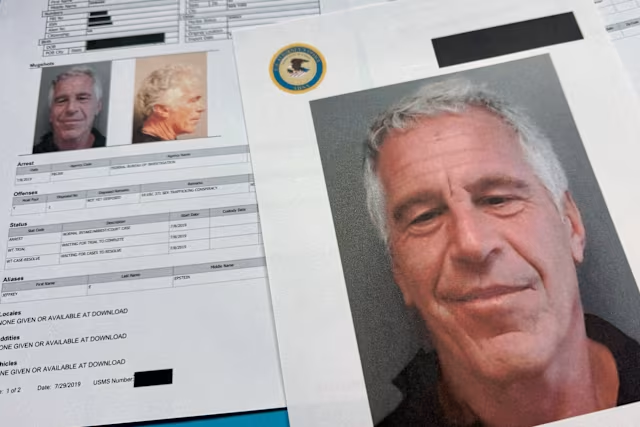
The DOJ emphasized that the release is not intended to reopen closed cases but to provide the public with unfiltered access to historical records. “This fulfills our commitment under the law to promote accountability and trust in our institutions,” a department spokesperson stated. However, critics argue that the sheer volume of documents—equivalent to thousands of novels—may overwhelm researchers and journalists, potentially burying key insights.
As the dust settles on this final tranche, advocacy groups such as the Epstein Victims’ Compensation Program are urging the public to approach the materials with sensitivity. “These documents contain painful truths about exploitation and power,” said program director Lisa Bloom. “We hope they lead to healing and reform, not sensationalism.”
The full collection is now available on the DOJ’s online portal, with search tools provided to navigate the extensive archive. Analysts expect ongoing scrutiny in the coming months, as independent reviews could uncover overlooked connections in Epstein’s web of influence, which once included politicians, celebrities, and business tycoons. For now, the release stands as a milestone in the long quest for transparency, though many question whether it will translate into tangible justice.


