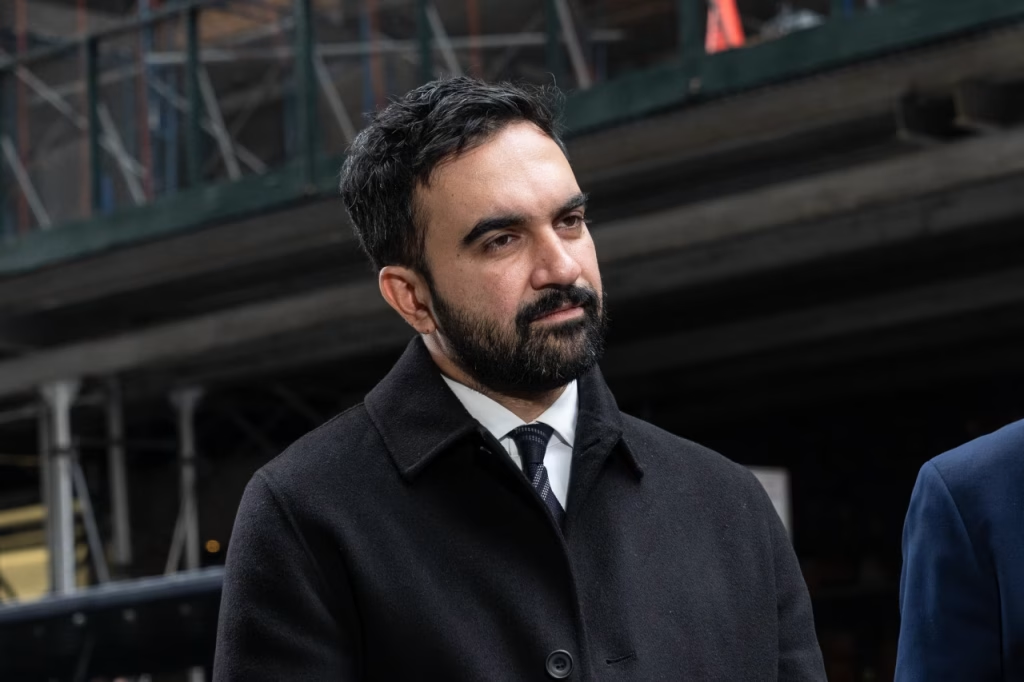
Mamdani Holds Double-Digit Lead in NYC Mayoral Race Amid Accents Scandal and Policy Firestorm
Mamdani Holds Double-Digit Lead in NYC Mayoral Race Amid Accents Scandal and Policy Firestorm
October 22, 2025
New York, NY – October 22, 2025 – In a city struggling with soaring housing costs, rising crime rates, and deepening political divides, 33-year-old Democratic Socialist Zohran Kwame Mamdani is surging ahead in the race for New York City mayor, defying a barrage of attacks on his authenticity and bold policy agenda.
Fresh polls released Wednesday show the Queens assemblyman holding a commanding 15-point lead over former Governor Andrew Cuomo and Republican Curtis Sliwa, with the November 4 election just two weeks away.
Born in Uganda to Indian immigrant parents, Mamdani has become a rising star in the progressive wing of the Democratic Party. He has captivated voters weary of the status quo under incumbent Mayor Eric Adams. His campaign—built on unapologetic calls for economic justice and systemic reform—promises an immediate rent freeze on stabilized apartments, a massive expansion of free public transit including 24-hour subway service, and a “millionaire’s tax” to fund affordable housing.
On public safety, Mamdani advocates reallocating police funds toward community mental health programs and ending stop-and-frisk practices, framing these reforms as essential to reducing violence in neighborhoods from the Bronx to Brooklyn.
“New Yorkers are tired of Band-Aids on bullet wounds,” Mamdani declared at a packed rally in Jackson Heights on Tuesday evening, his voice echoing through a community center filled with young activists and working-class families. “We’ve got billionaires dodging taxes while families sleep on subway platforms. It’s time to build a city that works for the 99%, not the 1%.”
Polls reflect his momentum: a Siena College survey conducted October 18–20 places Mamdani at 48% support among likely voters, with Cuomo trailing at 33% and Sliwa at 12%. Undecided voters have dropped to single digits, signaling a consolidation around Mamdani’s vision amid frustration with Adams’ administration, which faces federal corruption probes and criticism for its handling of migrant arrivals and homelessness.
Yet Mamdani’s frontrunner status has unleashed fierce backlash from opponents eager to cast him as an out-of-touch radical. The sharpest blow came last week when viral videos showed him slipping between accents—a polished New York tone in debates, a melodic cadence in cultural interviews, and traces of his East African roots in casual settings.
Conservative commentators, led by former President Donald Trump, seized on the clips in a fiery Truth Social post, dubbing it the “Accent Charade” and accusing Mamdani of “faking his way to City Hall like a bad Bollywood audition.”
“This guy’s a walking identity crisis—born in Africa, raised on curry and communism, now pretending to be a tough Queens guy,” Trump wrote, amplifying the clips to his 90 million followers. “New York deserves real leaders, not accent acrobats who’ll turn the Big Apple into a socialist banana republic!”
The authenticity controversy has fueled broader attacks on Mamdani’s personal story. Raised in a family of academics who fled political unrest in Uganda before settling in New York, Mamdani often highlights his parents’ immigrant journey to connect with the city’s diverse electorate. But rivals like Cuomo—attempting a comeback after his 2021 resignation amid sexual harassment allegations—have questioned his “true New York values.”
Mamdani’s policy platform has also drawn fire. His proposal for a sweeping property tax overhaul—cutting rates for owner-occupants while sharply increasing them for absentee landlords and luxury developers—has alarmed real estate executives and moderates who warn it could drive investment and jobs out of the city.
“This isn’t reform; it’s revenge,” Cuomo thundered at a Midtown fundraiser flanked by Wall Street donors.
Sliwa, founder of the Guardian Angels and the GOP’s standard-bearer, has gone further—branding Mamdani’s police reform plans as “defund disguised as compassion” and linking them to a 12% spike in homicides this year.
Meanwhile, Mamdani’s pro-Palestine stance, including his sponsorship of a City Council resolution calling for a Gaza ceasefire and his criticism of Israel’s military actions, has sparked accusations of extremism and division. Jewish advocacy groups have mobilized against him, while Trump allies have aired ads splicing Mamdani’s speeches with footage of anti-Israel protests, implying he prioritizes foreign conflicts over city issues.
“He’s not just anti-cop; he’s anti-American,” Sliwa charged in a Fox News interview, urging voters to reject “divisive woke warriors.”
Despite the onslaught, Mamdani’s campaign remains unfazed, framing the controversies as proof that “the establishment is scared.”
“They’re attacking us because we’re winning on ideas, not insults,” campaign manager Aisha Rahman told reporters.
Internal polling shows Mamdani maintaining strong support among Latino, Black, and South Asian voters—key blocs in a city where demographics shape elections—while young progressives are turning out in droves for phone banks and canvassing drives.
As Election Day approaches, the race feels less like a contest and more like a referendum on New York’s identity: Will voters embrace Mamdani’s vision of a fairer, bolder metropolis, or recoil from the upheaval his critics predict?
With early voting underway and absentee ballots flooding in, one thing is certain: the son of immigrants is rewriting the script on what it means to lead the world’s most improbable city.
This article is based on polls, public statements, and campaign filings as of October 22, 2025. For live updates, follow NYC Mayoral Race 2025 on major news outlets.