Washington, D.C. — The U.S. Supreme Court is expected to release its highly anticipated opinion Tuesday in Trump v. Barbara, a case that could dramatically reshape the scope of birthright citizenship in the United States.
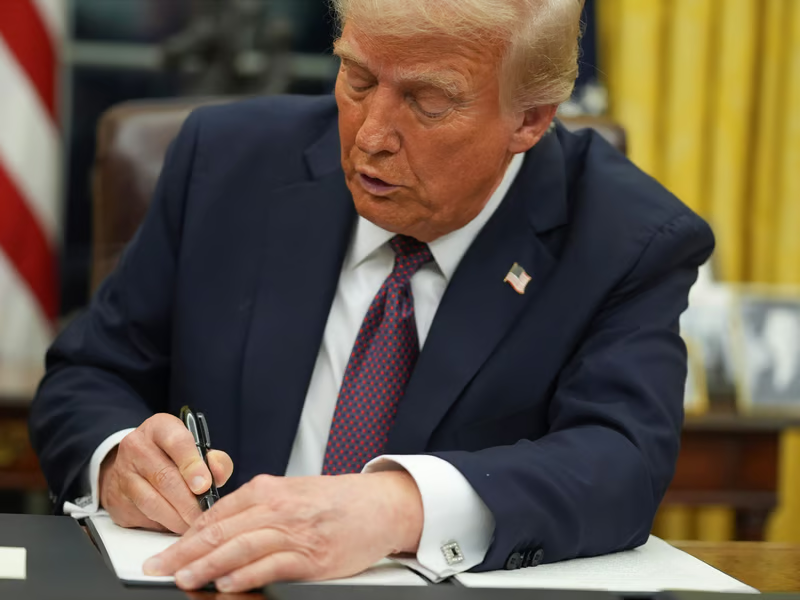
At issue is Executive Order 14,160, signed by President Donald Trump on January 20, 2025, his first day back in office. The order directs federal agencies to cease recognizing U.S. citizenship for children born on American soil after February 20, 2025, unless at least one parent is a U.S. citizen or lawful permanent resident. It further excludes cases where the mother’s presence in the country is deemed temporary.
Trump administration officials argue that the order aligns with a proper interpretation of the 14th Amendment’s Citizenship Clause, which states that citizenship applies to those “born or naturalized in the United States, and subject to the jurisdiction thereof.” They contend that children of undocumented immigrants or temporary visitors are not fully “subject to the jurisdiction” of the United States in the sense intended by the amendment’s framers.
Opponents of the order, including immigrant rights groups and the plaintiffs in the case, maintain that the policy violates long-standing precedent. They point to the Supreme Court’s 1898 decision in United States v. Wong Kim Ark, which affirmed that a child born in the U.S. to Chinese immigrant parents—who were not citizens and were ineligible for naturalization at the time—was nonetheless a U.S. citizen.
The case arrives amid a broader immigration enforcement push by the Trump administration. Recent Supreme Court rulings have already bolstered the administration’s efforts, including decisions that lifted certain deportation blocks and ended Temporary Protected Status for nationals of Haiti and Syria. These victories have contributed to a sharp decline in both illegal crossings and overall migration levels.
Legal analysts describe the birthright citizenship challenge as one of the most consequential immigration cases in decades. A ruling upholding the executive order could incentivize stricter enforcement of immigration laws and potentially affect hundreds of thousands of births annually. A decision striking it down would reaffirm the broad interpretation of jus soli, or right of the soil, that has defined American citizenship for more than a century.
The Court’s decision is expected before the end of its current term. Both sides have prepared statements in anticipation of the outcome, with immigration advocates warning of a constitutional crisis and administration supporters framing the case as a vital step toward ending what they call “birth tourism” and “anchor baby” incentives.
Further details on the opinion and any concurring or dissenting views will be released by the Court on Tuesday morning.

