In a move that has reignited debates over presidential power and election integrity, President Donald Trump issued a pardon on Thursday for Tina Peters, the former Mesa County, Colorado, clerk who was convicted last year on multiple felony charges related to election equipment tampering. However, legal experts and Colorado state officials quickly emphasized that the pardon carries no legal weight, as it applies only to federal offenses and cannot override state convictions.
Peters, a vocal supporter of Trump’s baseless claims of widespread voter fraud in the 2020 election, was found guilty by a jury in August 2024 on seven felony counts, including conspiracy to commit criminal impersonation and attempting to influence a public servant. The charges stemmed from her actions in 2021, when she allegedly allowed unauthorized individuals to access secure voting machines and shared confidential passwords and data with conspiracy theorists. Prosecutors argued that her actions were part of a broader effort to substantiate unfounded allegations of election rigging.
The case was prosecuted by a Republican district attorney in Mesa County, underscoring the bipartisan scrutiny Peters faced. She began serving a nine-year prison sentence in October 2024 and is currently appealing her conviction through Colorado’s state court system.
Trump’s pardon, announced in a White House statement, described Peters as a “patriot” who had been unfairly targeted for “exposing the truth about our elections.” The president has long championed individuals who challenged the 2020 election results, and this action aligns with his promises to defend those he considers victims of political persecution.
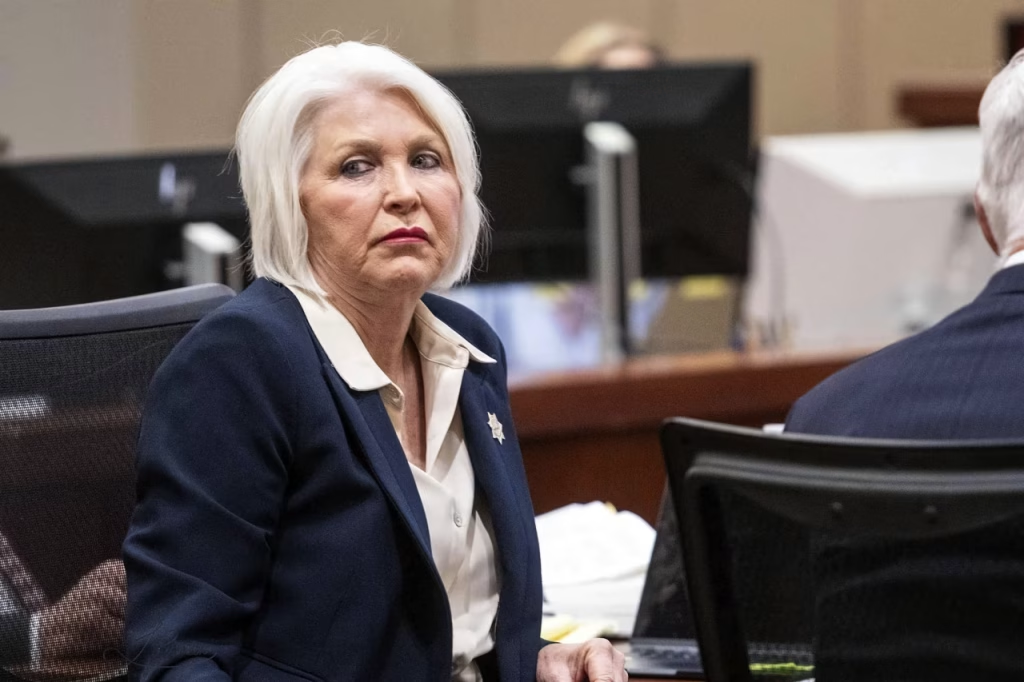
Despite its symbolic nature, the pardon has no legal effect on Peters’ situation. Under the U.S. Constitution, presidential pardons are limited to federal crimes and do not extend to state-level offenses or civil matters. Colorado Governor Jared Polis, a Democrat, dismissed the move in a statement, saying, “This so-called pardon changes absolutely nothing. Tina Peters was convicted in a state court by a jury of her peers, and she will continue to serve her sentence as our judicial process plays out.”
State Attorney General Phil Weiser echoed Polis’s remarks, noting that Peters remains incarcerated and that her appeals will proceed unaffected. “The president’s authority stops at the federal line,” Weiser said. “This is a reminder that no one is above the law in Colorado.”
Legal scholars have also weighed in, pointing to historical precedent. “Presidential pardons are powerful tools, but they are not magic wands for state convictions,” said Emily Hargrove, a constitutional law professor at the University of Denver. “We’ve seen similar attempts in the past involving state corruption cases, and they invariably fail to change outcomes.”
Peters’ supporters, including some conservative activists, have praised the pardon as a step toward justice, organizing online campaigns calling for her release. Critics, however, argue that the move undermines trust in the judicial system and could encourage further election interference.
As of now, Peters’ legal team has not commented publicly on the pardon, but sources close to the case indicate they are focused on state appeals rather than any federal intervention. The episode adds to a growing list of controversial pardons issued by Trump in his second term, further fueling debate over the scope and limits of executive clemency.

