WASHINGTON — Donald Trump declared Friday that the United States has ruled out any nuclear strike on Iran and maintains “total military control” over the escalating conflict, even as a fragile ceasefire holds and a U.S. naval blockade tightens its grip on the Strait of Hormuz.
The standoff entered its 55th day since joint U.S.-Israel airstrikes began on February 28. Trump rejected an Iranian offer to reopen the vital oil-shipping chokepoint, instead directing the Navy to fire on any vessels attempting to lay mines in the waterway. The blockade is designed to starve Iran’s regime of oil revenue and force concessions.
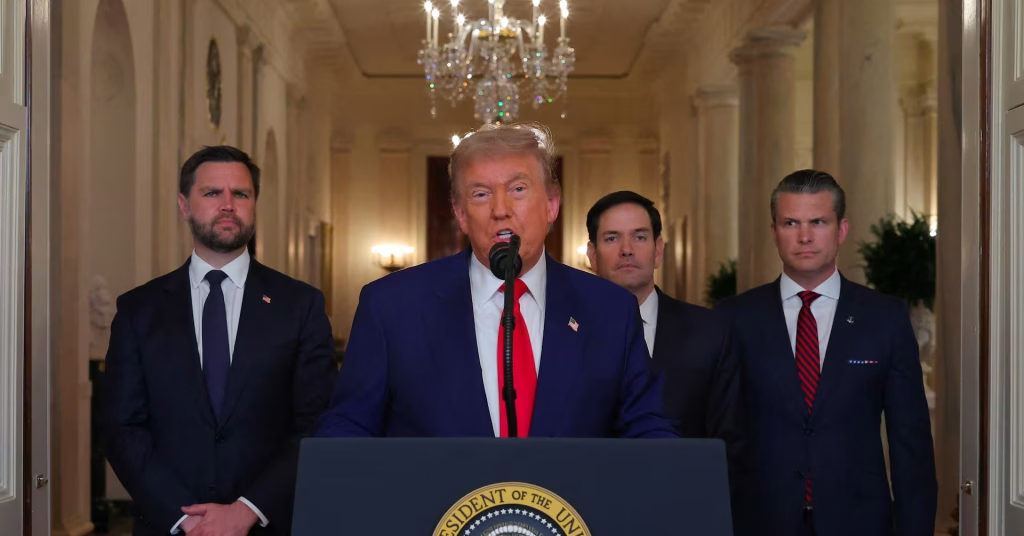
In remarks delivered from the White House, Trump described Iran’s leadership as “in complete chaos,” adding that moderate factions inside the country appear to be gaining ground. He insisted the American position is dominant and that Tehran has no viable path to victory.
“Our military is in total control,” Trump said. “We’re not going nuclear — we don’t need to. What we’re doing is working, and it’s going to end decades of weakness and failed deals.”
Arkansas Gov. Sarah Huckabee Sanders, a staunch Trump ally, praised the strategy in a statement released Friday morning.
“President Trump is finally ending the long-standing tensions that previous administrations allowed to fester,” Sanders said. “This is strong, decisive leadership that puts America and our allies first.”
Critics, however, sounded alarms about the long-term costs. With peace talks stalled and U.S. munitions stockpiles reportedly dwindling, several defense analysts and congressional Democrats warned of the risk of a prolonged war. The naval blockade has also driven domestic gas prices to $4 a gallon in many parts of the country, prompting fresh complaints from voters and business groups.
“The president’s approach may feel tough in the moment, but it risks dragging us into another endless Middle East conflict while our own supplies run low,” said one senior Democratic lawmaker who requested anonymity to discuss sensitive military assessments.
The White House has not released a detailed timeline for lifting the blockade or resuming formal negotiations. Pentagon officials confirmed the Navy remains on high alert in the Persian Gulf, ready to enforce Trump’s order against mine-laying attempts.
The situation remains fluid. Iran has not responded publicly to Trump’s latest statements, and the fragile ceasefire — already strained by sporadic incidents — shows no immediate signs of collapse.


